четверг, 14 мая 2020 г.

Для студентов I курса 3 группы ПСО 
на 14 мая 2020

Тема:                 Wales
Грамматика: the Future Perfect Tense


Прочитайте и переведите текст. 
Выпишите незнакомые слова с транскрипцией и выучите их. Фото. 
Аудиочтение текста отправьте на WhatsApp.

Wales is a country situated in the West of Britain. St. David is the patron saint of Wales. On the 1-st of March, St. David’s Day, patriotic Welsh people wear a leek or a daffodil, both symbols of Wales. 


National symbols of Wales - WikipediaThe population of Wales is about three million. The area of Wales is 20,764 sq. km. Wales is agricultural; there are few cities there, rather small and unimportant. The west coast, mid Wales and North Wales are wild and beautiful. Wales has high mountains, including Mount Snowdon, the second highest mountain in Britain. Snowdon looks very peaceful and beautiful. 
Cardiff, the modern capital of Wales, has a Roman castle and a modern shopping centre. Cardiff is an industrial city, which also has a cathedral and a university. Every year, an international festival called Eisteddfod is held in the town of Llangollen. People come from all over the world to recite poetry, sing and dance in this colourful competition.
There are two national languages in Wales – the Welsh language, which is spoken widely, especially in the North of the country and English. Both these languages are taught in schools. There are also Welsh and british TV channels. Rugby is the national game of Wales. The rules of the game are quite difficult. A team consists of fifteen players. The game is played with an egg-shaped ball. There are three National Parks in Wales. These parks are protected by law because of their natural beauty, but some people live and work there. 
The flag of Wales, with its red dragon, is one of the oldest in the world. It was brought to Britain by the Romans. The Welsh call their country Cymru and themselves Cymry, a word which has the same root as a "camrador" (friend, comrade).

1. Answer the questions in written/ Письменно ответьте на вопросы

  1. What is the geographical position of Wales?
  2. What is the capital of Wales?
  3. What are the national symbols?
  4. Is this an industrial country or an agricultural?
  5. What is the main economic activity in the country?
  6. On what languages do people speak in Wales?
  7. How do we call people in Wales (write English, Russian equivalents)?
  8. What scenery can people see in this country?
  9. What is the highest mountain in Wales?
  10. Can the Englishmen easily understand the Welsh?
  11. What is the national game of Wales?
  12. What does the word “Cymru” mean?
Future Perfect Simple с примерами и упражнениями
Посмотрите видео о FUTURE PERFECT.
Выпишите в тетрадь как образуется FP, слова-помощники и выучите.


Выполните упражнения для закрепления.

Future Perfect Tense Exercises | Tenses exercises, Perfect tense ...

    1. Пройдя по ссылке, выполните онлайн тест, фото с результатом мне на почту: 
    2. http://englishvoyage.com/exercises/future-perfect/future-perfect-exercise

    среда, 13 мая 2020 г.

    Для студентов II курса на 13 мая 2020


    Просмотрите ролики по истории ФБР и ЦРУ, обратите внимание на различия, перескажите. Видео с пересказом на WhatsApp:

    https://www.youtube.com/watch?v=0SB0Ak3eEI8

    https://www.youtube.com/watch?v=v7DnfWjNEIw

    https://www.youtube.com/watch?v=vebNxWGotC8

    Грамматика:

    Complex object (сложное дополнение) в английском языке

    посмотрите объяснение материала в видео:

    https://www.youtube.com/watch?v=TpAdZh6rkjo

    для закрепления темы выполните следующие упражнения, фотоотчет на почту:

    схема образования предложений:


    Примеры: 

    They want me to study English. Они хотят, чтобы я учила английский. 

    She expects him to buy a present. Она ожидает, что он купит подарок. 

    We think her to pass the exam. Мы думаем, она сдаст экзамен.


    Упражнение 1. Переведите предложения с английского.
    ПРИМЕР. I would like you to help me. – Я хотел бы, чтобы ты помог мне.

    1. Parents want their children to respect them.
    2. Parents don’t want their children to ignore them.
    3. Children don’t want their parents to shout at them.
    4. Children don’t want their parents make fun of them.
    5. Parents don’t let their children make fun of each other.
    6. Teenagers don’t want to be dependent on parents.
    7. Parents want their children to be independent.
    8. All people want to have somebody to rely on.
    9. All children want to have somebody to talk to.
    10. His father wants us to obey him.
    11. Her father wants her to have too many responsibilities.
    12. Our mother doesn’t want us to quarrel with each other.
    13. Our mother wants us to live in peace.
    14. I want him to give me advice.
    15. I don’t want you to argue with me.
    16. I expect her to advise me how to solve the problem.
    17. We expect our parents to help us.
    18. His father advised us to share the TV set.
    19. His classmate refused to help.
    20. She has nobody to talk to and she wants to have a person to talk to.
    21. They have nobody to rely on but they want to have a person to rely on.
    22. I expect all people to have equal rights.
    23. She doesn’t want them to depend on her.
    24. I don’t want us to have an argument.
    25. I expect us to discuss the situation.

    Упражнение 2. Перефразируйте предложения по образцу.
    ОБРАЗЕЦ. Teacher: «Come in time, Tom!» – Входи, Том. —
    The teacher wants him to come in time. Учитель хочет, чтобы Том вошел.
    1. «Speak English, Jane!»
    2. «Answer the question, Mary!»
    3. «Learn the words, boys.»
    4. «Read the text, Linda.’
    5. «Take part in the competition, children.’
    6. «Translate the sentence, Pete.’
    7. «Work in pairs, boys.»
    8. «Girls, listen to the dialogue!»
    9. «Ann, copy the words.»
    10. «Sam, you should work hard.»


    Упражнение 3. Дополните предложения по образцу и переведите их.
    1. Его кот хочет, чтобы он to give him some fish.
    2. Ее собака хочет, чтобы она to take him for a walk.
    3. Его девушка хочет, чтобы он to invite her for a party.
    4. Родители хотят, чтобы их дети to study well.
    5. Они хотят, чтобы родители to buy them new books.
    6. Я не хочу, чтобы бабушка to be nervous.
    7. Учитель не хочет, чтобы его ученики to ask so many questions.
    8. Ты хочешь, чтобы я to tell you the truth?
    9. Она хочет, чтобы я to come home early?
    Для студентов I курса 2 группы ПСА 
    на 13 мая 2020

    Тема:                 Wales
    Грамматика: the Future Perfect Tense


    Прочитайте и переведите текст. 
    Выпишите незнакомые слова с транскрипцией и выучите их. Фото. 
    Аудиочтение текста отправьте на WhatsApp.

    Wales is a country situated in the West of Britain. St. David is the patron saint of Wales. On the 1-st of March, St. David’s Day, patriotic Welsh people wear a leek or a daffodil, both symbols of Wales. 


    National symbols of Wales - WikipediaThe population of Wales is about three million. The area of Wales is 20,764 sq. km. Wales is agricultural; there are few cities there, rather small and unimportant. The west coast, mid Wales and North Wales are wild and beautiful. Wales has high mountains, including Mount Snowdon, the second highest mountain in Britain. Snowdon looks very peaceful and beautiful. 
    Cardiff, the modern capital of Wales, has a Roman castle and a modern shopping centre. Cardiff is an industrial city, which also has a cathedral and a university. Every year, an international festival called Eisteddfod is held in the town of Llangollen. People come from all over the world to recite poetry, sing and dance in this colourful competition.
    There are two national languages in Wales – the Welsh language, which is spoken widely, especially in the North of the country and English. Both these languages are taught in schools. There are also Welsh and british TV channels. Rugby is the national game of Wales. The rules of the game are quite difficult. A team consists of fifteen players. The game is played with an egg-shaped ball. There are three National Parks in Wales. These parks are protected by law because of their natural beauty, but some people live and work there. 
    The flag of Wales, with its red dragon, is one of the oldest in the world. It was brought to Britain by the Romans. The Welsh call their country Cymru and themselves Cymry, a word which has the same root as a "camrador" (friend, comrade).

    1. Answer the questions in written/ Письменно ответьте на вопросы

    1. What is the geographical position of Wales?
    2. What is the capital of Wales?
    3. What are the national symbols?
    4. Is this an industrial country or an agricultural?
    5. What is the main economic activity in the country?
    6. On what languages do people speak in Wales?
    7. How do we call people in Wales (write English, Russian equivalents)?
    8. What scenery can people see in this country?
    9. What is the highest mountain in Wales?
    10. Can the Englishmen easily understand the Welsh?
    11. What is the national game of Wales?
    12. What does the word “Cymru” mean?
    Future Perfect Simple с примерами и упражнениями
    Посмотрите видео о FUTURE PERFECT.
    Выпишите в тетрадь как образуется FP, слова-помощники и выучите.


    Выполните упражнения для закрепления.

    Future Perfect Tense Exercises | Tenses exercises, Perfect tense ...

      1. Пройдя по ссылке, выполните онлайн тест 
      2. http://englishvoyage.com/exercises/future-perfect/future-perfect-exercise

      вторник, 12 мая 2020 г.

      Для I курса на 12 мая 2020

      ВНИМАНИЕ!!!
      Если по техническим причинам ссылки не открылись, дублирую рабочие проверенные! Пройдите по этим ссылкам для просмотра роликов! 

      https://www.youtube.com/watch?v=fUnSB-E0rDM
      https://www.youtube.com/watch?v=SXK-pRivCbI

      пятница, 8 мая 2020 г.


      Для II курса 2 группы ПСА на 8 мая 2020


      Прочтите текст о Шотландии, переведите его (письменно), выпишите  незнакомые слова и выражения из текста. В
      идео устного пересказа текста выслать  на WhatsApp.


        Scotland is a beautiful country with dramatic mountains, lochs and many offshore islands. The Cheviot Hills is a natural boundary between England and Scotland. This part of the UK is divided into three regions: Lowlands, Highlands and Southern Upland.
        Scotland is not densely populated. Most part of the Scottish population lives in Lowlands.
        Scotland's biggest city, Glasgow, is situated on the bank of the river Clyde. Though this city is the biggest port and the most industrially developed, still it is not the capital.
        Edinburgh has been the capital of Scotland since the 15th century. It is known as "the Athens of the North" and is one of the United Kingdom's nicest cities. There is the Palace of Holyrood House in Edinburgh, the Queen's official residence in Scotland.


        In the Highlands the Scots speak English with their own accent. Besides English they also speak Gaelic, the ancient Scottish language. Many Scottish surnames start with Mac or Mc (e.g. MacDonald, McCalister). "Mac" means "son of". MacDonald and Campbell were once two main clans.
        Highland region is famous for the clan system, which was the basis of the Highland life in the early days. The word "clan" comes from the Gaelic and means "children" and clan's members were united by kinship from the common ancestor. Each clan had its own tartan. Though tartan was worn in other parts of Scotland, it was in the Highlands, where it became the symbol of clan kinship. Tartan was a kind of checked cloth and was worn by both men and women. But the kilt (a kind of skirt made of tartan) was worn only by men.
        Even though the clan system has lost its power it had over the years, people still wear the tartan of their clan, either a tie or a kilt to proclaim their pride in their origin.
        The Great Glen in the Scottish Highlands is a valley, which contains three famous lochs: Lochy, Oich and Ness. The most famous of these is Loch Ness.


         It is deeper than the North Sea and is very long and very, very narrow and has never been known to freeze. Some people believe that a large monster lives in it. There are many stories about this water monster Nessie. Year after year thousands of tourists come to Loch Ness, put up their tents and watch the lake in the hope to see the monster. Since then, Nessie has been seen many times but has never harmed anyone. Interest in Nessie became great and over the years several scientific investigations have taken place.
        Scotland is known for its so-called Highland Games. During these games different competitions are held. At the beginning of the games, people march to the game place and the pipers play the bagpipes.
        There is an interesting custom in Scotland. It is the world's biggest New Year's Eve party, which takes place for several days. At the end of each year at midnight people together sing the old song of Robert Burns "Auld Lang Syne" what means "For old times' sake".
      An old belief says that if the first person who enters the Scottish house after the beginning of a new year is a dark-haired man with a piece of coal, all the members of this family will have good luck.
       St. Andrew is the Saint Patron of Scotland. St. Andrew's cross is a "saltire" [səl'taiə], or X-shaped cross. His cross, in white on a blue background, remains the pride symbol of Scotland today and forms a central component of the Flag of the United Kingdom. St. Andrew's Day is on November 30th.
        Scotland is associated with the names of such writers and poetsas Walter Scott, Robert Louis Stevenson and Robert Burns.
        Scotland is also traditionally regarded as the home of golf.
       The thistle is the national emblem of Scotland.


      Грамматика: 
      Future Perfect 
      (вопросительная и отрицательная формы).

      Future Perfect аналогичен временам Present Perfect и Past Perfect, только для будущего времени.

      Когда мы хотим рассказать о будущем, то используем вспомогательный глагол will (shall). Но если при употреблении Future Simple достаточно только его, то конструкция Future Perfect выглядит немного сложнее.

      Future Perfect образуется при помощи вспомогательного глагола will (реже — shall для подлежащих I и We) и совершенного инфинитива Perfect Infinitive (have + третья форма смыслового глагола).

      Will используется со всеми лицами и числами.

      Если смысловой глагол является правильным — то его третья форма (V3) образуется при помощи окончания -ed.
      Если смысловой глагол неправильный — то его третью форму (V3) берем из таблицы неправильных глаголов.
      Подсказка: если вам кажется, что глагол неправильный, а в таблице его нет — значит он все-таки правильный и его третья форма образуется при помощи окончания -ed.

      Например:

      to work → worked (работать)
      to play → played (играть)
      to relax → relaxed (отдыхать)
      to buy → bought (покупать)
      to forgive → forgiven (прощать)
      to sleep → slept (спать)
      ВАЖНО: При построении предложения — обратите внимание на союзы.

      После союзов when (когда) / before (перед тем, как) / till (до) / until (до) (в придаточных времени) мы всегда используем конструкцию настоящего времени Present Simple, даже если говорим о будущем.

      Will he have learned enough German to communicate before he moves to Berlin? — Он в достаточной степени выучит немецкий, до того, как переедет в Берлин?


      Примеры предложений с использованием времени Future Perfect

      Утвердительные предложения:

      She will have arrived at the station by midnight — Она прибудет на станцию к полуночи

      Kids will have finished their homework by dinner — Дети закончат со своей домашней работой к ужину

      Tom will have repaired the car by the end of next week — Том закончит ремонтировать машину до конца следующей недели

      We will have built the guest house by May — Мы построим домик для гостей к маю.

      Отрицательные предложения:

      I won’t have received my order by Friday — Я не получу свой заказ к пятнице

      John will not have finished the presentation by 6 o’clock — Джон не закончит презентацию до шести часов

      She will not have written the book by the end of the year — Она не напишет книгу к концу года

      Mary won’t have flown to London by Monday — Мэри не прилетит к Лондон к понедельнику

      Вопросительные предложения:

      Will they have made a decision by noon? — Они примут решение к полудню?

      Will he have done his design project by Friday? — Он закончит свой дизайн-проект к пятнице?

      Will you have cooked dinner when I come home? — Ты приготовишь ужин к моменту моего возвращения домой?

      How many pictures will you have painted by the end of the day? — Сколько картин ты нарисуешь до конца дня?

      Внимательно прочитайте теоретический материал по грамматике, просмотрите видеоролик по теме:


      Выполните следующие упражнения:

      1. Переведите предложения  в отрицательную и вопросительную формы:
      1. We will have played two games of cricket by 6 o’clock tomorrow.
      2.  They will have left the country by next Monday.
       3. She will have returned from the walk by 8 o’clock tomorrow.
       4. We will have done the shopping by 5 o’clock tomorrow.
       5. Martin will have passed all the exams by next Wednesday.
       6. You will have known the results of the test by tomorrow evening.
       7. Angela will have written the essay by Tuesday.
      8. The workers will have finished decorating our house by next month.
       9. The performance will have finished by 8 o’clock.
       10. The weather will have changed by tomorrow evening.

      2.Переведите глаголы в скобках в правильную форму:

      1. Janet … (to make) the cake by 3 o’clock tomorrow.
      2.  … Chris … (to book) a table in the restaurant by next Sunday? — Yes, he ….
      3. Unfortunately, Sam … (not to return) from his business trip by next Wednesday.
      4. … Cindy … (to prepare) her speech by Monday? — Yes, she … .
      5. … the bookkeeper … (to pay) all the bills by next Friday? — No, he ….
      6. I… (to write) a shopping list for you by tomorrow morning.
      7. … you … (to speak) to your parents by tomorrow? — Yes, I … .
      8. …Tom … (to pack) his rucksack by the time the bus arrives? — Yes, he ….
      9. I"m afraid Molly … (not to make) photocopies of all the documents by the end of the working day.
      10. … we … (to reach) the camp by sunset? — I hope we … .

      четверг, 7 мая 2020 г.


      Для студентов II курса РИПК на 7 мая 2020

      «Natural disasters» 

      Прочитайте и переведите текст 1. Выпишите незнакомые слова. Видео с пересказом выслать на WhatsApp.

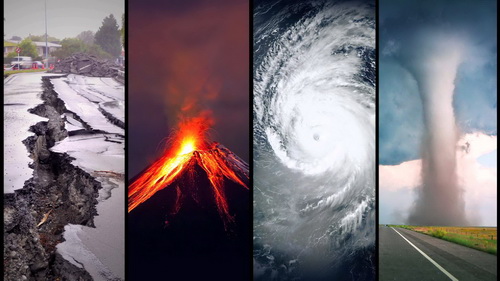
      Natural disasters like earthquakes, tornado, tsunami and floods happen more frequently nowadays. There are many reasons why they occur, but the main one is related to human activity on Earth which often has a negative impact on our environment. All kinds of disasters are usually very damaging. Many dwellings, roads and even whole streets and cities are ruined. The number of victims usually terrifies as hundreds or even thousands of people get injured or die in disasters. However, each disaster has a different nature. For example, an earthquake is the result of the tectonic plates’ movement which leads to the shaking of a certain area on land. Earthquakes destroy buildings and people usually become victims because they get stuck or killed under the rubble. Tornado is also a natural disaster which looks like an enormous column of the wind which lifts cars, bicycles, furniture and many other things. It is also called a twister and it can be very dangerous if touches the surface of the ground or water. Flood in its turn happens when rivers burst their banks. Most extended floods damage cities and wash away whole populated places. Tsunami is another natural disaster which arises as a series of huge waves caused by underwater earthquakes. Thus, there are many natural disasters which are dangerous for all of us. We should be careful and treat our planet better in order not to die with it.


      Фразы: 
      Natural disaster – природный катаклизм
      Earthquake – землетрясение 
      Flood – наводнение 
      Environment – окружающая среда 
      Victim – жертва 
      To ruin/to destroy – разрушать 
      Under the rubble – под обломками 
      To burst the banks – выходить из берегов

      Текст 2
      Прочитайте и переведите текст 2. Выпишите незнакомые слова. Составьте письменный пересказ. 

      disasters
      Mother Nature can act rather scary sometimes. Almost every day TV channels, radio and newspapers report on natural disasters striking different parts of the world. Scientists say that earthquakes, tornados, floods, droughts, tsunamis, landslides and hurricanes are happening more frequently nowadays. Global warming, pollution and growing industrialization lead to imbalance in our echo-system.  
      A natural disaster can be defined as an uncontrollable extreme disruption which causes ecological and financial damage and victims of vulnerable population. Sometimes the events can be predicted by special meteorological warning systems and they often happen in the same geographical area because they are related to climate and physical characteristics of the region. For example, Florida is constantly suffering from tornadoes and hurricanes, and Japan – from earthquakes.
      An earthquake happens when tectonic plates of the earth move and they make the area shake violently. According to the Richter scale the magnitude of earthquakes is measured from 1 to 10 points. The most powerful earthquake was recorded in 1960 in Chile, its magnitude was 9.5.
      Volcanic eruptions occur when hot red magma erupts from the earth’s crust and flows from the top of the volcano. It also throws volcano ashes into the air which are harmful to inhale for human beings and animals.
      A tsunami is a series of dangerous huge ocean waves, usually caused by underwater earthquakes. This natural disaster attacks the shore all of a sudden and often results in thousands of deaths. The height of the waves can reach 30 metres.
      Flooding is another natural disaster. Floods happen when the water level in rivers and seas becomes too high. Sometimes flash floods can even wash away whole villages.
      During extremely hot dry summers our world usually suffers from vast forest fires and severe droughts. Wildfires are especially dangerous in windy weather when they spread very easily. Droughts may result in famine because the land becomes dry and people can’t grow any plants and vegetables on it.
      A tornado is an enormous column of twisting wind that moves very fast and destroys houses, raises in the air and throws people, animals and heavy things. Hurricanes and tornados are very common in America and the Atlantic Ocean.
      Landslides happen when earth and rocks on slopes become loose or water-laden and they fall down the hills or mountains.
      People face great problems after disasters: the water is usually infected, the communication lines (electricity, telephone) are often damaged, most of the buildings and property are destroyed, agricultural crops are also damaged. Natural disasters are great tragedies to many countries and nations. They take a lot of people’s lives. Thousands of people become homeless, unemployed. They need medical and psychological help.

      Грамматика
      II-й тип условных предложений в английском языке

      посмотрите видеоролик по данной теме:
      Выполните следующие упражнения:
      1. Поставьте глаголы из скобок в необходимую форму.
      1. If he … (be) my friend, I … (invite) him to the party.
      2. If I … (be) taller, I … (become) a basketball player.
      3. If an asteroid … (hit) our planet, it … (cause) an ice age.
      4. John … (travel) around the world if he … (win) a lottery prize.
      5. We … (go) to Spain this winter if we … (have) enough money.
      6. She … (not mind) if you … (borrow) her car.
      7. If you … (move) to another city, I … (phone) you every day.
      8. They … (laugh) at me if I … (sing) this song.
      9. If we … (have) free time, we … (start) a new hobby.
      10. If I … (know) her secret, I … (not tell) it to anyone.
      2. Составьте условные предложения II типа, используя данные слова в необходимой форме. Переведите.
      Н-р:   the questions be so easy/ all of us pass the test. – If the questions were so easy, all of us would pass the test. (Если бы вопросы были такими легкими, мы все сдали бы тест.)
      1. he be slim/ he be more attractive.
      2. I pick the children up/ I am not busy.
      3. you drink much wine/ you feel sleepy.
      4. I am married/ I have lunch at home.
      5. Peter live in a house/ he have a dog.
      3. Замените условные предложения I типа (реальное условие) на условные предложения II типа (нереальное условие).
      Н-р:  If we make a fire, we will frighten away the wolves. (Если мы разожжем костер, мы спугнем волков.) – If we made a fire, we would frighten away the wolves. (Если бы мы разожгли костер, мы бы спугнули волков.)
      1. If you leave the child alone, he will hurt himself.
      2. We’ll make nice pictures if Paola brings a camera.
      3. If it snows, the kids will make a snowman.
      4. I’ll buy this laptop if I have enough money.
      5. If our granny puts on her glasses, she will see the flowers.
      6. If you are too busy, we’ll leave you alone.
      7. I will plant the tomatoes tomorrow if it rains.
      8. If Bob finds his relatives, he will live with them.
      Для студентов I курса 2 группы ПСО на 7 мая 2020

      Тема: Scotland

      Scotland 
      Bagpipes
      Scotland is a country in the north of Great Britain. It is apart of the United Kingdom. Scotland is divided into three natural regions: the Southern Uplands, the Central Lowlands and the Highlands and islands. A lot of places in Scotland are a natural paradise, still untouched by man.
      The capital of Scotland is Edinburgh, well known for its castle. Glasgow is the industrial capital of Scotland. It is the third largest city in Great Britain. The typical products of Scotland are timber, whisky, salmon. Golf is the Scottish natural sport and it seems to have originated in this country.
      Scotland is also the land of myths and mysteries; every castle has its ghost. And of course everyone knows about the Loch Ness, Monster. «Nessie» is said to be about six meters long, with a long, thin neck. 

      THE ICONIC TARTAN AND KILTS

      Tartan kilt
      Scottish kilts, known as ‘The National Dress of Scotland’, have deep cultural and historical roots and are a sacred symbol of patriotism and honour for a true Scotsman. Kilts are made of tartan, worn around the waist and accompanied by a sporran, which is a small bag worn over the kilt, a kilt pin which holds the two pieces of tartan together at the front, and a sgian dubh, a small dagger which sits in the sock.
      Originating back to the 16th century, the kilt first appeared as a thick, woollen full-length garment whose upper half could be worn over the head as a hood, or as a cloak draped over the shoulder. It wasn’t until the late 17th or early 18th century that the knee-length kilt was developed and was worn throughout the Highlands and northern Lowlands.

      THE MUSIC OF THE BAGPIPES


      No visit to Scotland is complete without hearing the iconic sound of traditional Scottish music, and of course, Scotland’s national instrument, the bagpipe. 


      8. Контроль усвоенного страноведческого материала. 
      Test
      l) Scotland consists of ...
      a) 2 parts
      b) 3 parts
      c) one part
      2) Scotland is situated ...
      a) in the south of Britain
      b) in the west of Britain
      c) in the north of Britain
      3) The first people appeared in Scotland were ...
      a) Celtic tribes
      b) Gaelic tribes
      c) Anglo-Saxon tribes
      4) The National emblem of Scotland and the Edinburgh Festival is ...
      a) a rose
      b) a thistle
      c) a daffodil
      5) The industrial heart of Scotland is ...
      a) Glasgow
      b) Edinburgh
      c) Cardiff
      6)  Two Scotland's best know products are ...
      a) whisky and haggis
      b) whisky and roast turkey
      с) haggis and tea
      7) "Clan" is a Scottish name for ...
      a) family
      b) business partners
      c) a group of friends
      8) A single piece of cloth, a part of Scottish dress is ...
      a) a bagpipe
      b) a kilt
      c) a tartan
      9) A Scottish name for New Year's Eve is ...
      a) Easter
      b) Hogmanay
      c) Christmas
      10) First Footer must be ...
      a) a man or a boy with dark hair
      b) a man or a boy with fair hair
      c) a woman with dark hair
      11) First Footer must bring
      a) a piece of chalk, a piece of chocolate, a silver coin
      b) a piece of coal, a piece of cake, a silver coin
      c) a piece of coal, a piece of bread, a lot of money
      d) a piece of coal, a piece of bread, a silver coin
      12) Loch Ness is ...
      a) a lake of monster
      b) a lake of magic
      c) a lake of unknown animals.
      13) You can see a monument to ... in Edinburgh. *
      a) R.Burns
      b) W.Scott
      c) G.Byron
      14) Tattoo is a colourful military show with music takes place ...
      a) in August and September
      b) in July and August
      c) only in August
      15) Glasgow is a centre of ...
      a) gardening
      b) engineering
      c) of winter tourism
      16) A Scottish name for woolen fabric with coloured crossing stripes is ...
      a) a mackintosh
      b) a kilt
      c) a tartan

      Степени сравнения прилагательных в английском языке Прилагательные в английском имеют степени:  положительную (positive) сравнительную (comp...