суббота, 1 мая 2021 г.

 Present Perfect Simple и Present Perfect Progressive

Посмотрите ролик:

https://www.youtube.com/watch?v=k1NAH3SbUg4


Вставьте глаголы в правильное время (Present Perfect Simple или Present Perfect Progressive)

  1. Я (играю)  футбол пять лет.
  2. Моя команда (победа / только)  два матча пока.
  3. Остальные (быть / всегда)  лучше.
  4. Мы еще не там? Мы (гуляем)  часами.
  5. Но мы (обложка / только)  область пять миль пока.
  6. Я (закончил / просто)  моя домашняя работа.
  7. Я (работаю)  на этом эссе с двух часов.
  8. Джейн (выходи)  с Бобом семь лет.
  9. Мартин (дата)  три девушки на этой неделе.
  10. Как долго (подожди / ты)  для нас?

Упражнение 2.

Вставьте глаголы в правильное время (Present Perfect Simple или Present Perfect Progressive).

  1. A: (ты / играешь / когда-либо)  большой теннис?
  2. B: I (играть / только) теннис один или два раза. А вы?
  3. A: Я (учусь)  теннис в течение двух лет.
  4. B: (вы / возьмите)  участие в каких-либо соревнованиях еще нет?
  5. A: Я (участвую)  в четырех конкурсах этого года.
  6. B: (ты / победа)  какие-нибудь призы на данный момент?
  7. A: Нет, я (выиграл / нет) что-нибудь еще. Я еще не так хорош. (вы / входите / когда-либо)  соревнование?
  8. B: Я (плаваю) на семь лет и я (получаю / уже)  некоторые трофеи.

Упражнение 3.

Какая форма правильная (Present Perfect Simple или Present Perfect Progressive)?

  1. Мы хотим рассказать, как мы провели время:

  2. Действие завершено:

  3. Хочу рассказать, как провел время:

  4. Хочу подчеркнуть, что дверь открыта:

  5. Хочу подчеркнуть, что дом готов:

Упражнение 4.

Вставьте глаголы в правильное время (Present Perfect Simple или Present Perfect Progressive).

  1. A: (вы / возьмите)  собака еще гуляет?
  2. B: Я (работаю) весь день. Я (пришел / просто) домой с работы и я (есть / нет)  время еще гулять с собакой.
  3. A: Как долго (собака / быть)  один дома?
  4. Б: Около 6 часов. Вы (ходить / нет) собака давно. Ты не хочешь пойти?
  5. A: Ну, я (бездельничать / нет) ты знаешь, примерно весь день тоже. Завтра у меня очень важная встреча, а я все еще (закончу / нет)  моя презентация.
  6. B: Хорошо, тогда я пойду. Куда (вы / положили)  ошейник и поводок?
  7. A: Они на кухне. Кстати, (ты / ешь) что-нибудь еще? Если нет, не могли бы вы нам что-нибудь купить в супермаркете?

Упражнение 5.

Вставьте глаголы в правильное время (Present Perfect Simple или Present Perfect Progressive).

  1. A: Я (звоню) для вас на полчаса. Где (быть) И почему твоя одежда такая грязная?
  2. B: Я (приборка)  до сарая в саду.
  3. A: (вы / находите) коробка со старыми фото есть? Я (смотрю)  для этого на века.
  4. B: Я (обнаружил / нет) его пока нет, но я (работаю / нет) еще давно. Я (пришел / просто)  чтобы съесть что-нибудь.
  5. A: Я (готовлю / не готовлю) еще ничего, потому что я (говорю)  нашему соседу.


Исключения при добавлении 'ing':
  • тихий е сброшен. (но: не применяется для -ee)
  • Пример: приезжайте - ком ING
    Абер: согласен - AGR й Ing

  • после короткой ударной гласной последний согласный удваивается

    Пример: сидеть - сидеть

  • после гласной последний согласный l удваивается в британском английском (но не в американском английском).

    Пример: путешествия - Трава Л.Л. ИНГ

  • окончательный т.е. становится y .

    Пример: ложь - л у ING

вторник, 27 апреля 2021 г.


Nuclear Bomb Explosion


At present nuclear detonations are the most devastating of the weapons of mass destruction. Depending upon the environment in which the nuclear device is detonated, blast effects are manifested as ground shock, water shock, cratering, and large amounts of dust and radioactive fallout.

The energy of a nuclear explosion is transferred to the surrounding medium in three distinct forms: blast; thermal radiation; and nuclear radiation.

Because of the tremendous amounts of energy liberated per unit mass in a nuclear detonation, temperatures of several tens of million degrees centigrade develop in the immediate area of the detonation. This is in marked contrast to the few thousand degrees of a conventional explosion. At these very high temperatures the non-fissioned parts of the nuclear weapon are vaporized. The atoms do not release the energy as kinetic energy but release it in the form of large amounts of electromagnetic radiation.


In an atmospheric detonation, this electromagnetic radiation, consisting chiefly of soft x-ray, is absorbed within a few meters of the point of detonation by the surrounding atmosphere, heating it to extremely high temperatures and forming a brilliantly hot sphere of air and gaseous weapon residues, the so-called fireball. Immediately upon formation, the fireball begins to grow rapidly and rise like a hot air balloon.

Within a millisecond after detonation, the diameter of the fireball from one megaton (Mt) air burst is 150m. This increases to a maximum of 2200 m within 10 seconds, at which time the fireball is also rising at the rate of 100 m/sec. The initial rapid expansion of the fireball severely compresses the surrounding atmosphere, producing a powerful blast wave.


As it expands toward its maximum diameter, the fireball cools, and after about a minute its temperature has decreased to such an extent that it no longer emits significant amounts of thermal radiation. The combination of the upward movement and the cooling of the fireball gives rise to the formation of the characteristic mushroom-shaped cloud. As the fireball cools, the vaporized materials in it condense to form a cloud of solid particles. Following an air burst, condensed droplets of water give it a typical white cloudlike appearance.

In the case of a surface burst, this cloud will also contain large quantities of dirt and other debris which are vaporized when the fireball touches the earth's surface or are sucked up by the strong updrafts afterwards, giving the cloud a dirty brown appearance. The dirt and debris become contaminated with the radioisotopes generated by the explosion or activated by neutron radiation and fall to earth as fallout.

The relative effects of blast, heat, and nuclear radiation will largely be determined by the altitude at which the weapon is detonated. Nuclear explosions are generally classified as air bursts, surface bursts, subsurface bursts, underwater bursts and high altitude bursts. The most dangerous are underwater and high altitude bursts, although other bursts are pretty dangerous too.


Заучите слова и выражения из текста:


  • the Chernobyl Accident - Чернобыльская катастрофа
  • AIDS - СПИД
  • Airplanes and security - Самолеты и безопасность
  • Anti-drugs Campaign - Антинаркотическая кампания
  • Biological Weapons - Биологическое оружие
  • Bird Flu - Птичий грипп
  • Chemical Weapons - Химическое оружие
  • Chernobyl and People - Чернобыль и люди
  • Children and Toxicomania - Дети и токсикомания
  • Cloning - Клонирование
  • Cold War - Холодная война
  • Drugs - Наркотики
  • Ecological Problems - Экологические проблемы
  • Environmental Pollution - Загрязнение окружающей среды
  • Environmental Protection
  • Environmental Protection - Защита окружающей среды
  • Global Warming - Глобальное потепление
  • Healthy Food - Здоровая пища
  • Human Evolution - Человеческая эволюция
  • New Anti-drugs Campaign for Young People - Новая кампания против наркотиков для молодежи
  • Nuclear Bomb Explosion - Ядерный взрыв
  • Nuclear War and its Outcomes - Ядерная война и ее последствия
  • Nuclear Weapon - Ядерное оружие
  • Overpopulation - Перенаселение
  • Problems of Youth - Проблемы молодежи
  • The Advantages and Disadvantages of Television
  • The History of Nuclear Bomb Creation - История создания ядерной бомбы
  • The Hole in the Ozone Layer - Озоновая дыра
  • The Problem of Environmental Protection - Проблема защиты окружающей среды
  • The Problem of Smoking - Проблема курения
  • Water Pollution - Загрязнение воды

  • понедельник, 26 апреля 2021 г.


    PRESENT PERFECT CONTINUOUS TENSE 

     "НАСТОЯЩЕЕ СОВЕРШЕННОЕ ПРОДОЛЖЕННОЕ ВРЕМЯ" 

    Посмотрите ролик, пройдя по ссылке:

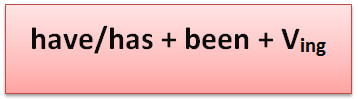
    formula

    1. Поставьте глаголы из скобок в форму Present Perfect Continuous.

    1. The vegetables … (boil) since 10 o’clock. (Овощи варятся с 10 часов.)
    2. He … (wait) for her answer for six months. (Он ждет ее ответа в течение 6 месяцев.)
    3. My sister … (send) job applications for 3 months. (Моя сестра рассылает заявления о приеме на работу в течение 3 месяцев.)
    4. I … (try) to find my documents since last Sunday. (Я пытаюсь найти свои документы с прошлого воскресенья.)
    5. They … (learn) Japanese for a couple of years. (Они изучают японский язык пару лет.)
    6. Father … (drill) holes in the wall since noon. (Папа сверлит отверстия в стене с полудня.)
    7. My brother … (play) computer games for 3 hours. (Мой брат играет на компьютере в течение 3 часов.)
    8. I … (listen) to you very carefully. (Я слушаю тебя очень внимательно.)
    9. He … (not take) his medicine for the last week. (Он не принимает лекарство в течение последней недели.)
    10. We ... (save) the money for a holiday for a year. (Мы копим деньги на отпуск в течение года.)


    2. Ответьте на вопросы, используя одно их предлагаемых ниже действий в Present Perfect Continuous.

    Н-р:   Why are you angry? (Почему ты рассержен?) – Because I’ve been waiting for a bus for a long time. (Потому что я долго жду автобус.)

    wait for a bus for a long time

    - wash the floors

    - decorate a Christmas tree

    - use expensive creams for a couple of years

    - peel the onions

    - make a snowman in the garden

    - play football on the grass

    1. Why are you angry?
    2. Why is she crying? (Почему она плачет?)
    3. Boys, why are your shorts dirty and green? (Мальчики, почему ваши шорты грязные и зеленые?)
    4. Why are you sweating? (Почему ты потеешь?)
    5. Why are your hands so cold? (Почему у тебя такие холодные руки?)
    6. Why are the children so excited? (Почему дети так взволнованы?)
    7. Why does she look so young? (Почему она выглядит так молодо?)


    3. Поставьте в предложения for или since.

    1. Bob has been playing hockey … he was a small boy.
    2. She’s been driving that car … five years.
    3. We have been planning our vacation … last month.
    4. He has been talking on the phone … 8 o’clock.
    5. You have been telling the same anecdotes … many years.
    6. I have been feeling ill … a couple of days.


    4. Опишите каждую ситуацию одним предложением, используя for или since и глаголы в Present Perfect Continuous.

    Н-р:   I started writing an article last month and I’m still writing it. (Я начал писать статью в прошлом месяце, и до сих пор пишу ее.) – I have been writing an article since last month. (Я пишу статью с прошлого месяца.)

    1. Tom started playing chess when he was 6 and he still plays it.
    2. Martha started looking for a job 4 months ago and she is still looking for it.
    3. Mother started cooking chicken in the morning and she is still cooking it.
    4. It started snowing 3 days ago and it’s still snowing.
    5. Kate went to bed last night and she is till sleeping.

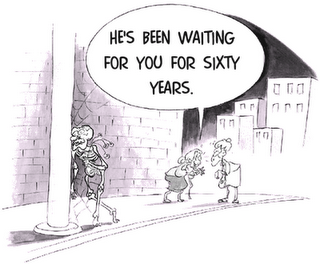
     present perf cont


     The  Present Perfect Continuous Tense Обозначает действие, которое началось когда-то в прошлом, длилось какое-то время и только что или сов...